CSR Approach
Environment and CSR
Application of the HQE Approach
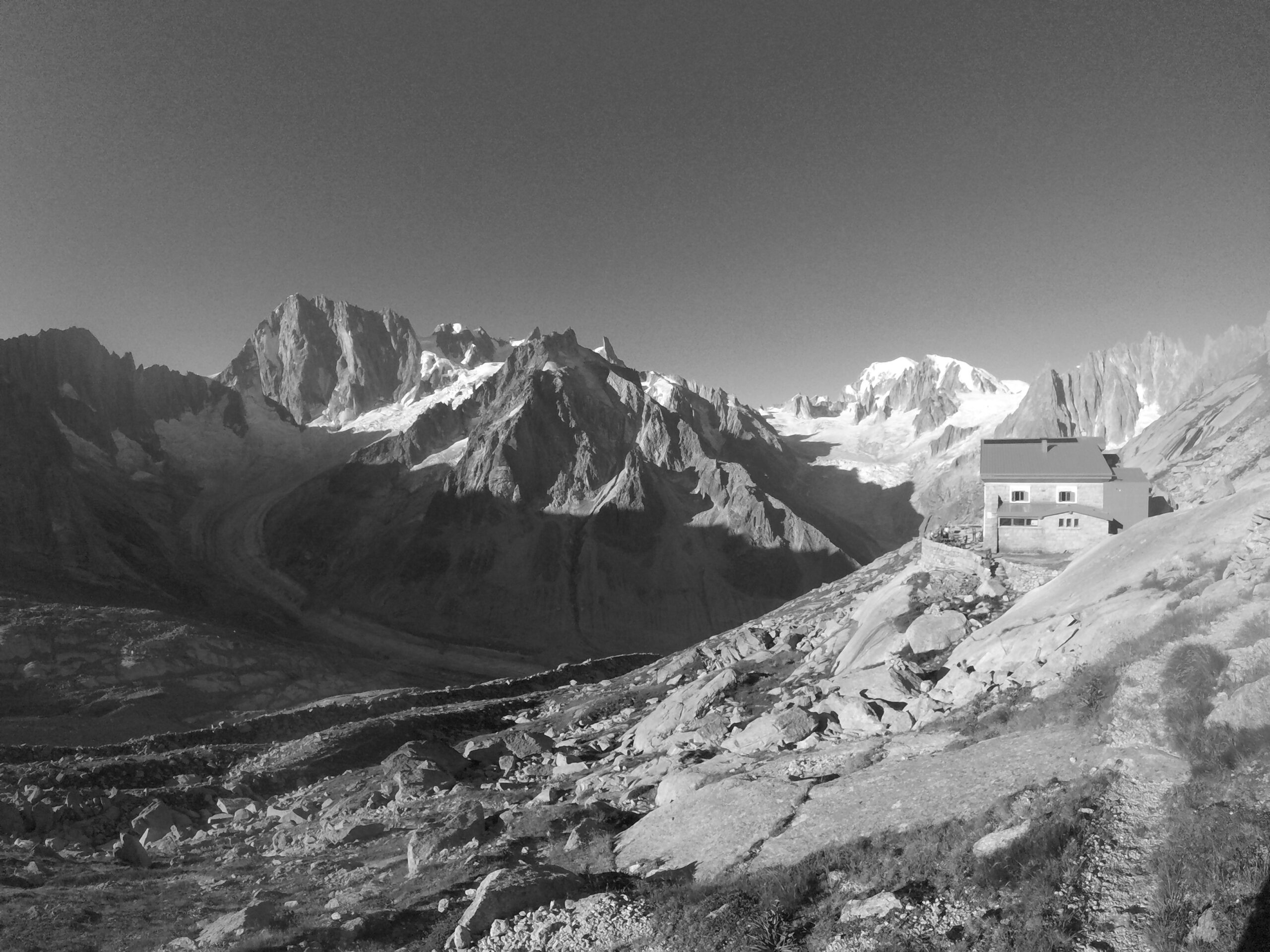
During the renovation of the Couvercle refuge, we implemented the HQE approach for the project’s development, including its construction phase.
This exercise allowed me to clearly visualize and thus consider the associated challenges during the project design phase, by integrating solutions addressing these targeted challenges from the initial sketches.
Unfortunately, technical constraints prevented us from fully achieving certain targets, but the essential principles were maintained, and today the project is sound, comfortable, and all generated waste was sorted where possible or kept on-site for reuse.
It should be able to obtain certification if the administrative process were completed.
Today, this is an approach I apply to all my projects, like a checklist that I consult during the sketch phase and particularly during the DCE (Execution Design Documents) phase.
The indicated targets are linked to specific clauses in the CCTP (Special Technical Clauses) of my consultation documents and thus become contractual if the contracts are properly established based on the provided CCTP/DQE (Detailed Quantity Estimates).
1. A Young Agency Focused on Responsible and Committed Architecture
ARCAD-studio is a recently established architectural agency, driven by the desire to embed the act of building within a socially responsible and environmentally respectful dynamic.
We believe that architecture must actively contribute to building a more equitable, inclusive, and sustainable society.
With a view to future development and potential employee recruitment, the agency developed a CSR policy from its inception, with social values as the founding pillar of its operation and professional practice.
2. Ethical Structuring and Evolving Governance
Even if ARCAD-studio does not yet have salaried staff, the agency’s future structure will be based on clear and proactive principles:
- Fair recruitment: The agency is committed to developing a diverse team, representative of the varied backgrounds and talents of the region. Particular attention will be paid to equal opportunities, diversity, and inclusion.
- Responsible working conditions: Future employees will benefit from a respectful, flexible, and professionally fulfilling work environment (quality of life, autonomy, continuous training).
- Culture of dialogue: The agency will promote collaborative management methods, based on listening, transparency, and collective intelligence.
3. Project Methodology Based on Listening and Participation
In each of its projects, ARCAD-studio adopts a concerted and inclusive design approach, consistent with its primary philosophy of horizontality and with the social challenges specific to each territory.
Local consultation: We will prioritize a participatory approach involving users, residents, associations, and municipal services from the initial stages of reflection.
Accessibility and uses: Beyond standards, our projects are designed to be truly accessible, comfortable, and welcoming for all user profiles (seniors, families, people with disabilities, etc.), as seen in the renovation project of the Joux presbytery, for which work was carried out with the Passy town hall to rehouse a family whose children have autism.
Sensitive approach to vulnerable populations: We systematically integrate considerations for welcoming vulnerable populations, social diversity, and the quality of space usage.
4. A Strong Commitment to the Region
The Arve Valley, and more broadly Haute-Savoie, presents particular challenges: cohabitation between permanent residents and tourists, climatic constraints, geographical constraints, enhancement of built and natural heritage, etc. ARCAD-studio therefore wishes to embed its actions within this demanding local context by:
- Leveraging local resources and stakeholders (businesses, artisans, social partners).
- Fostering social and intergenerational connections in the programming and design of spaces.
- Proposing projects adapted to local uses, in all seasons, and respectful of the Haute-Savoie identity.
5. Evaluation and Continuous Improvement
From its first projects, the agency implemented a social evaluation process for its projects and operations:
- Monitoring user satisfaction.
- Review of consultation processes conducted.
- Commitments regarding accessibility and uses.
- Internal CSR indicators (Inclusive recruitment, training, territorial involvement).
These indicators will serve as a basis for continuous improvement of its social impact, in line with the expectations of local authorities.